

Why this fitness guide works better than a random saved reel
This page explains how a fitness challenge should work in real life: as a short block of structure, not as a fake promise that your body will change overnight.
A useful fitness challenge is not magic. It is a temporary structure that makes consistency easier by narrowing the number of decisions you have to make. The problem is that many online challenges chase excitement, not adherence. They promise body transformations on a timeline that makes beginners feel like failures before the work has even had time to matter.
This page reframes the idea. A good challenge creates accountability, manageable training density, and clear check-in markers. That is what turns a challenge from low-value content into something that can actually help a real person.
How to get value from this guide in the first week
Use these three steps to keep the page practical instead of letting it turn into another saved tab.
Run the first session as written
Start with skill and strength and let Bodyweight Squat set the tone. The page becomes easier to judge when day one is clean instead of overbuilt.
Use the anchor lifts, then flex the rest
Keep the first one or two movements consistent and use the listed home or gym swaps only when the setup demands it. The anchors matter more than perfect exercise loyalty.
Track one performance signal
Log sets, reps, and one technique note on Bodyweight Squat. If that one movement looks better next week, the page is already giving you useful feedback.
Who gets the most from this fitness guide
Use the points below to judge whether this fitness guide fits your current level, setup, and goal.
- You like the motivation of challenges but do not want unrealistic promises or unsafe volume.
- You want to create your own 7-day, 14-day, or 30-day challenge with better structure.
- You need a beginner-safe framework before starting one of GymPedia's challenge pages.
What a good challenge should deliver
- Clear training rhythm for a short block
- Measurable behaviors such as sessions completed, steps, protein targets, or sleep
- Recovery planning so motivation does not become injury risk
- Honest checkpoints instead of dramatic before-and-after language
Your repeatable weekly layout for use challenges as structure, not as unrealistic promises
The schedule below is designed around 3-5 focused sessions a week with repeatable exercise selection. Start with skill and strength, repeat it for a few weeks, and let pattern quality on Bodyweight Squat become obvious before you chase novelty.
| Day | Focus | Main session | Support work |
|---|---|---|---|
| Day 1 | Skill and strength | Squat, push-up, row, plank | Log weights and energy |
| Day 2 | Light conditioning | Walk, incline treadmill, or cycling | Focus on consistency |
| Day 3 | Strength repeat | Hinge, split squat, press, dead bug | One small progression only |
| Day 4 | Recovery or mobility | Steps, stretching, hydration | Use the day on purpose |
Movement-by-movement coaching
The movement library below keeps the page practical: Bodyweight Squat, Push-Up, and Seated Row. Each entry includes the job of the exercise, setup details, common mistakes, smart substitutions, and local video demos.
Bodyweight Squat
Squats make a challenge feel grounded in movement quality, not random intensity. In the context of What Is a Fitness Challenge Really Supposed to Do? A Useful Framework for Beginners, this movement earns its place because it teaches repeatable effort instead of random fatigue.
Target muscles: Legs and coordination
Step-by-step instructions
- Plant the full foot, inhale into your midsection, and create tension before descending.
- Let the knees travel naturally while keeping pressure through the mid-foot instead of only the toes.
- Use a depth you can own with a neutral torso and stable hips.
- Stand up by driving the floor away, then reset the brace before repeating.
Common mistakes
- Rushing the descent so the knees and feet stop cooperating.
- Standing up with the chest collapsing and losing balance at the hardest point.
Pro tips
- Use your warm-up sets to find the foot stance that keeps the whole foot grounded before the work sets start.
For Bodyweight Squat, work in the 3 x 12-15 range here and leave a little technical margin so the last rep still looks like the first in this fitness guide.
Home alternative: Supported squat to chair
Gym alternative: Goblet squat
Push-Up
Push-ups scale well, making them ideal for challenge settings with mixed ability levels. In the context of What Is a Fitness Challenge Really Supposed to Do? A Useful Framework for Beginners, this movement earns its place because it teaches repeatable effort instead of random fatigue.
Target muscles: Chest, triceps, core
Step-by-step instructions
- Set your hands just outside shoulder width and lock the body into one straight line before the first rep.
- Lower under control until the chest gets close to the floor or bench without the hips sagging.
- Push the floor away while keeping the ribs tucked and the shoulders away from the ears.
- Reset the plank between reps so the final reps look like the first ones.
Common mistakes
- Letting the hips sag and turning the rep into a lower-back exercise.
- Shortening the range because the first rep was too hard from the chosen variation.
Pro tips
- Raise the hands on a bench or sturdy surface before you do ugly floor reps; cleaner volume builds faster progress.
For Push-Up, work in the 3 x 8-12 range here and leave a little technical margin so the last rep still looks like the first in this fitness guide.
Home alternative: Incline push-up
Gym alternative: Bench press
Seated Row
A row balances pressing and reminds you that every short challenge still needs a complete body approach. In the context of What Is a Fitness Challenge Really Supposed to Do? A Useful Framework for Beginners, this movement earns its place because it teaches repeatable effort instead of random fatigue.
Target muscles: Back and posture muscles
Step-by-step instructions
- Set your torso angle first so your lower back feels stable and your chest stays proud.
- Start the pull by moving the shoulder blade, then bring the elbow toward the hip instead of yanking with the hand.
- Keep your neck long and avoid shrugging as the weight travels.
- Control the return fully so the target muscle stays loaded instead of the stack bouncing.
Common mistakes
- Leaning back so far that the torso, not the lats or upper back, moves the load.
- Cutting the return short and losing half of the training effect.
Pro tips
- Think elbow to hip on lats work and elbow out on upper-back work so the right tissue gets the stress.
Use roughly 3 sets of 10-12 for Seated Row in this fitness guide. The goal is repeatable quality, not squeezing out sloppy extras.
Home alternative: Band row
Gym alternative: Chest-supported row
Plank
Planks keep the challenge rooted in control instead of only speed and fatigue. In the context of What Is a Fitness Challenge Really Supposed to Do? A Useful Framework for Beginners, this movement earns its place because it teaches repeatable effort instead of random fatigue.
Target muscles: Core and posture
Step-by-step instructions
- Set your ribcage down and lightly tuck the pelvis so the abs do the work instead of the hip flexors alone.
- Move only through the range where your lower back stays quiet and controlled.
- Exhale through the hardest part to improve brace quality.
- Stop the set the moment the torso starts rocking or the neck takes over.
Common mistakes
- Holding tension in the neck and jaw instead of the trunk.
- Choosing a range that makes the lower back take over.
Pro tips
- Shorter, cleaner sets beat long sloppy sets when the goal is trunk control and visible progression.
For Plank, work in the 2 x 30-45 sec range here and leave a little technical margin so the last rep still looks like the first in this fitness guide.
Home alternative: Knee plank
Gym alternative: Weighted plank
Farmer Carry
Carries are perfect for challenge blocks because they are simple, honest, and easy to measure. In the context of What Is a Fitness Challenge Really Supposed to Do? A Useful Framework for Beginners, this movement earns its place because it teaches repeatable effort instead of random fatigue.
Target muscles: Grip, trunk, posture
Step-by-step instructions
- Stand tall with the load set evenly in each hand before you start walking.
- Take short controlled steps and keep the ribs stacked over the hips instead of leaning side to side.
- Squeeze the handles hard and let the upper back stay long rather than rounded.
- Stop the set when posture slips, not only when grip is burning.
Common mistakes
- Adding speed before you own the pattern.
- Letting the easiest body part compensate for the weakest one.
Pro tips
- Keep one rep in reserve on the first week so your technique stays sharp enough to build on next session.
Use roughly 3 sets of 20-30 m for Farmer Carry in this fitness guide. The goal is repeatable quality, not squeezing out sloppy extras.
Home alternative: Backpack carry
Gym alternative: Trap-bar carry
How to scale the plan without losing the point
These coaching notes matter most when Bodyweight Squat is still inconsistent or when you are trying to restart use challenges as structure, not as unrealistic promises without overcomplicating the page.
If you are newer than you think
Treat the plan like skill practice first. If Bodyweight Squat and the next key movement are improving, you do not need extra volume just to feel more serious about use challenges as structure, not as unrealistic promises.
If you already have a base
If you already recover well, add one focused accessory and make the final main set work harder. The upgrade is better output on the same skeleton, not a totally different plan for use challenges as structure, not as unrealistic promises.
| Main movement | Home-friendly option | Gym-friendly option |
|---|---|---|
| Bodyweight Squat | Supported squat to chair | Goblet squat |
| Push-Up | Incline push-up | Bench press |
| Seated Row | Band row | Chest-supported row |
| Plank | Knee plank | Weighted plank |
| Farmer Carry | Backpack carry | Trap-bar carry |
Food, recovery, and real-life fixes that keep the plan usable
Training only sticks when the meals, timing, and recovery habits are realistic enough to repeat next week too, especially when use challenges as structure, not as unrealistic promises is the target.
Build meals around repeatability first. A protein source, one easy carb, and hydration you can actually maintain will support skill and strength better than a complicated nutrition phase.
Pre-workout
Before training, think light and repeatable: curd with fruit, eggs on toast, poha, milk with a banana, or a smaller dal-rice meal that will not sit heavily before Bodyweight Squat.
Schedule fix
Home training gets better when the opening minute is already decided. Lay out Bodyweight Squat, start the timer, and let momentum do the rest.
What readers usually skip
- Choose one body metric and two behavior metrics. For example: waist measurement, sessions completed, and average steps.
- A challenge works better when the exit plan is clear. Decide what routine you will continue after the block ends.
- If motivation crashes on day three, shorten the session before skipping the day entirely.
- The challenge should make your routine simpler, not consume all your daily mental energy.
What your first month should honestly look like
Good progression should make Bodyweight Squat and Push-Up look steadier before it makes the page feel dramatically harder.
Week 1: Build the groove
Start with cleaner reps, calmer pacing, and enough restraint that the second exposure still feels useful. The point is to build rhythm around skill and strength, not to win the week.
Week 2: Add useful work
Add a small rep increase or one extra set on the first one or two movements if form stays sharp, especially around Bodyweight Squat. If recovery is bad, keep volume steady and improve execution instead of forcing use challenges as structure, not as unrealistic promises.
Week 3: Push the main lifts a little
This is the week to make the bodyweight squat look steadier without turning the whole routine chaotic. Cleaner reps and better pacing usually do more for beginners than constantly changing the plan.
Week 4: Compare, then recycle
Use the fourth week as a checkpoint, not a finish line. If the anchor lifts in skill and strength are cleaner and recovery is manageable, recycle the structure and keep building from there.
A challenge can improve momentum within days, but visible body changes still follow the same physics as regular training and nutrition. Think of the challenge as a starting ramp, not a miracle window.
Quick answers before you leave this guide
These are the questions most likely to come up once you try to use the page in real life.
Do I need every exercise listed on this page?
No. The first one or two anchor movements matter most. Use the substitutions when your setup demands it and keep the training intent intact instead of forcing one exact version.
How many times a week should I use this guide?
Use it at the frequency suggested in the weekly layout and let Bodyweight Squat tell you whether recovery is keeping up. If the first movement keeps getting sloppier, simplify before you add more volume.
When should I progress the plan?
Progress when the current version looks cleaner and more repeatable, not just when you feel impatient. Small rep bumps, cleaner tempo, or one extra set usually beat a dramatic rewrite.
Sources behind the coaching calls in this guide
These references support the coaching choices in What Is a Fitness Challenge Really Supposed to Do? A Useful Framework for Beginners. They are here to ground the page in published guidance and better evidence, not to replace individualized coaching or medical care.
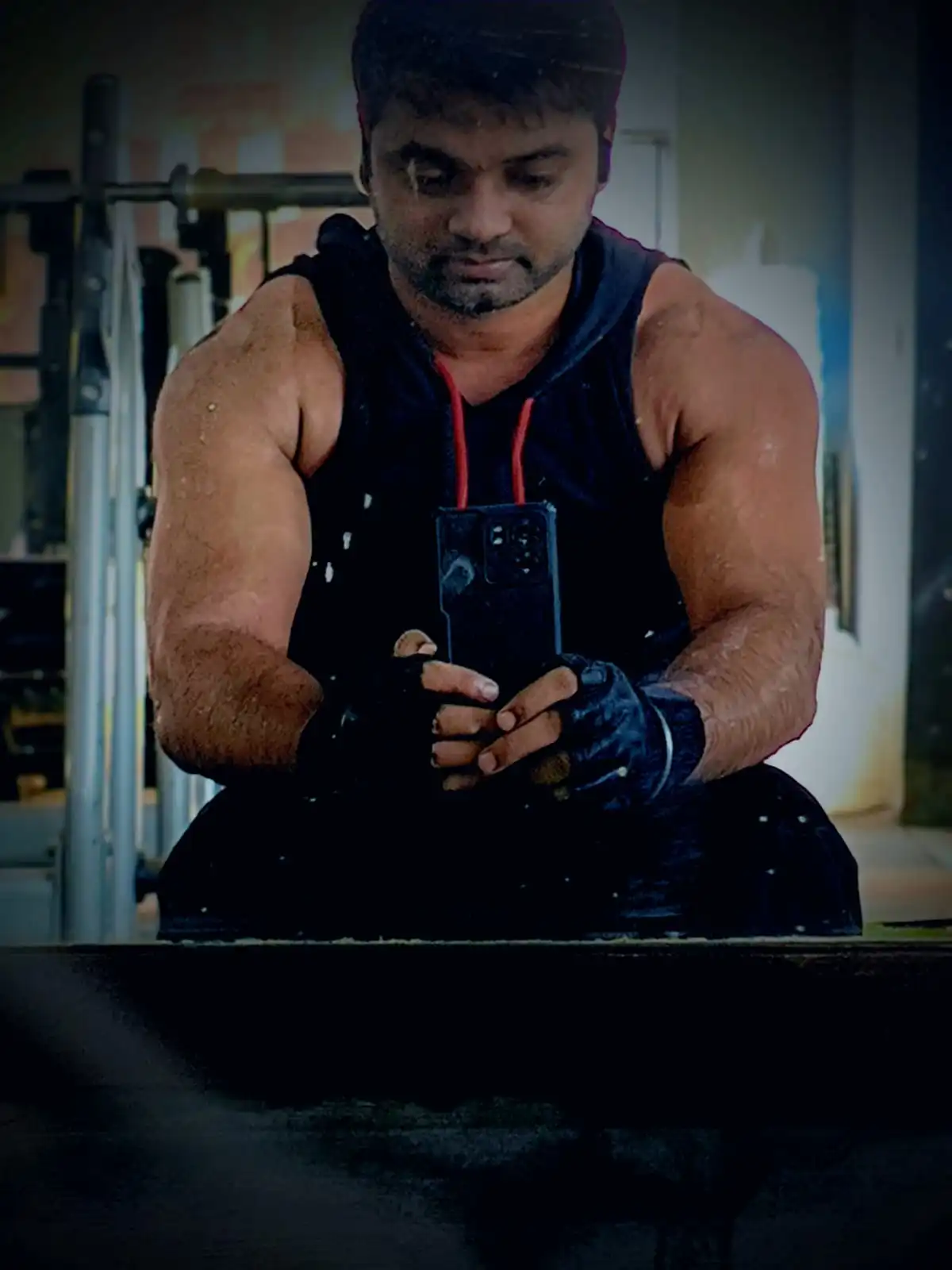
Alok Kumar Sharma
Alok Kumar Sharma writes these workout guides from the perspective of a regular gym-goer who learned more from fixing inconsistency than from chasing perfect phases on the way to use challenges as structure, not as unrealistic promises.
- Focus: Indian budget fitness, beginner gym systems, body recomposition, and sustainable muscle gain
- Training style: strength-first technique, simple tracking, and realistic progress over flashy challenge culture
- Typical lens: crowded commercial gyms, home-workout friction, hostel meals, office fatigue, and family-kitchen meal planning
- Every core guide is reviewed by Rahul Verma, Certified Fitness Trainer (ISSA) for exercise safety, setup, tempo, substitutions, and progression clarity