

Before you start chasing harder variations
This page is built for a clear short-term block with planned recovery and the kind of friction that shows up in a real mixed beginner routine when build stronger core control with a 30-day plank challenge that stays realistic is the goal.
A plank challenge can be useful if it teaches better trunk control. It becomes useless when it turns into a competition to suffer through longer and uglier holds every day.
This version keeps planks at the center but builds around them with simple core work so your breathing, pelvic position, and movement quality improve along with the hold time.
How to get value from this guide in the first week
This section is here to make the guide easier to apply the same day you read it.
Run the block in order
Treat own the starting hold as the starting anchor and keep the challenge sequence intact. These pages work better as short blocks than as random individual days.
Do not punish missed days
If you miss a day, resume the schedule instead of doubling the next session. A challenge only has value if it keeps momentum alive.
Judge completion, not drama
Track sessions finished, movement quality, energy, and consistency. That tells you more than whether every day felt intense enough for social media.
What a good plank challenge should improve by the end of the month
Better planks are about quality first: ribs down, glutes on, pelvis controlled, and breathing under tension.
Shorter clean sets beat marathon holds with a sagging lower back every time.
Support exercises matter because the plank works best when the rest of your trunk control improves too.
Use this page if these realities apply to you
This guide fits best if your current goal is to build stronger core control with a 30-day plank challenge that stays realistic.
- You want to improve core strength without jumping straight into complicated ab circuits.
- You like the idea of a plank challenge but do not want fake promises about getting abs in one month.
- You want a short core-focused challenge that still helps lifting, posture, and daily movement.
The weekly structure that keeps momentum steady
A useful challenge gives you rhythm, not chaos. Keep the sequence intact, respect the recovery days, and let consistency do the work.
| Day | Focus | Main session | Support work |
|---|---|---|---|
| Week 1 | Own the starting hold | Use short plank sets, dead bugs, and easy rotation work | Stop before the lower back takes over |
| Week 2 | Add time slowly | Increase total plank time across the week, not all in one brutal set | Keep breathing steady |
| Week 3 | Add challenge | Use mountain climbers or harder plank variations with control | Keep torso shape clean |
| Week 4 | Retest cleanly | Compare your best clean hold and your control under fatigue | Carry the stronger brace into other lifts |
Form notes and practical exercise details
The movement library below keeps the page practical: Plank, Dead Bug, and Bicycle Crunch. Each entry includes the job of the exercise, setup details, common mistakes, smart substitutions, and local video demos.
Plank
Plank teaches trunk stiffness that carries into squats, hinges, and everyday posture. In the context of 30-Day Plank Challenge for Beginners With Better Core Progression, this movement earns its place because it teaches repeatable effort instead of random fatigue.
Target muscles: Rectus abdominis, transverse abdominis, obliques
Step-by-step instructions
- Set your ribcage down and lightly tuck the pelvis so the abs do the work instead of the hip flexors alone.
- Move only through the range where your lower back stays quiet and controlled.
- Exhale through the hardest part to improve brace quality.
- Stop the set the moment the torso starts rocking or the neck takes over.
Common mistakes
- Holding tension in the neck and jaw instead of the trunk.
- Choosing a range that makes the lower back take over.
Pro tips
- Shorter, cleaner sets beat long sloppy sets when the goal is trunk control and visible progression.
A practical starting point for Plank on this challenge block is 3 sets of 30-45 sec. End the set when speed or position starts to slip.
Home alternative: Forearm plank from knees
Gym alternative: Weighted plank
Dead Bug
Dead bug teaches ribcage and pelvis control that makes every other core movement cleaner. In the context of 30-Day Plank Challenge for Beginners With Better Core Progression, this movement earns its place because it teaches repeatable effort instead of random fatigue.
Target muscles: Deep core stabilizers
Step-by-step instructions
- Set your ribcage down and lightly tuck the pelvis so the abs do the work instead of the hip flexors alone.
- Move only through the range where your lower back stays quiet and controlled.
- Exhale through the hardest part to improve brace quality.
- Stop the set the moment the torso starts rocking or the neck takes over.
Common mistakes
- Adding speed before you own the pattern.
- Letting the easiest body part compensate for the weakest one.
Pro tips
- Keep one rep in reserve on the first week so your technique stays sharp enough to build on next session.
Sets and reps for Dead Bug in this challenge block: 2 sets of 8-10 per side. Stop with 1-2 solid reps still in reserve unless the page says otherwise.
Home alternative: Bent-knee dead bug
Gym alternative: Swiss-ball dead bug
Bicycle Crunch
This gives beginners a simple way to train trunk rotation control without loading the spine heavily. In the context of 30-Day Plank Challenge for Beginners With Better Core Progression, this movement earns its place because it teaches repeatable effort instead of random fatigue.
Target muscles: Abs and obliques
Step-by-step instructions
- Set your ribcage down and lightly tuck the pelvis so the abs do the work instead of the hip flexors alone.
- Move only through the range where your lower back stays quiet and controlled.
- Exhale through the hardest part to improve brace quality.
- Stop the set the moment the torso starts rocking or the neck takes over.
Common mistakes
- Holding tension in the neck and jaw instead of the trunk.
- Choosing a range that makes the lower back take over.
Pro tips
- Shorter, cleaner sets beat long sloppy sets when the goal is trunk control and visible progression.
A practical starting point for Bicycle Crunch on this challenge block is 3 sets of 10-16 per side. End the set when speed or position starts to slip.
Home alternative: Slow dead bug
Gym alternative: Cable twist
Cable Crunch
Cable crunch gives you a simple way to progress abs with load once bodyweight work feels easy. In the context of 30-Day Plank Challenge for Beginners With Better Core Progression, this movement earns its place because it teaches repeatable effort instead of random fatigue.
Target muscles: Upper abs and trunk flexion strength
Step-by-step instructions
- Set your ribcage down and lightly tuck the pelvis so the abs do the work instead of the hip flexors alone.
- Move only through the range where your lower back stays quiet and controlled.
- Exhale through the hardest part to improve brace quality.
- Stop the set the moment the torso starts rocking or the neck takes over.
Common mistakes
- Holding tension in the neck and jaw instead of the trunk.
- Choosing a range that makes the lower back take over.
Pro tips
- Shorter, cleaner sets beat long sloppy sets when the goal is trunk control and visible progression.
Sets and reps for Cable Crunch in this challenge block: 3 sets of 12-15. Stop with 1-2 solid reps still in reserve unless the page says otherwise.
Home alternative: Band standing crunch
Gym alternative: Machine crunch
Russian Twist
Use this as a lighter finisher for rotation endurance once the main anti-extension work is done. In the context of 30-Day Plank Challenge for Beginners With Better Core Progression, this movement earns its place because it teaches repeatable effort instead of random fatigue.
Target muscles: Obliques and trunk rotation
Step-by-step instructions
- Set your ribcage down and lightly tuck the pelvis so the abs do the work instead of the hip flexors alone.
- Move only through the range where your lower back stays quiet and controlled.
- Exhale through the hardest part to improve brace quality.
- Stop the set the moment the torso starts rocking or the neck takes over.
Common mistakes
- Holding tension in the neck and jaw instead of the trunk.
- Choosing a range that makes the lower back take over.
Pro tips
- Shorter, cleaner sets beat long sloppy sets when the goal is trunk control and visible progression.
A practical starting point for Russian Twist on this challenge block is 2 sets of 12-16 per side. End the set when speed or position starts to slip.
Home alternative: Seated twist without weight
Gym alternative: Landmine 180
Mountain Climber
This movement blends heart-rate work with trunk tension, which is useful when you only have floor space. In the context of 30-Day Plank Challenge for Beginners With Better Core Progression, this movement earns its place because it teaches repeatable effort instead of random fatigue.
Target muscles: Core, shoulders, hip flexors, conditioning
Step-by-step instructions
- Start with a pace you can repeat for the full interval instead of sprinting the first ten seconds.
- Keep the landing soft and the trunk braced so the movement stays athletic instead of chaotic.
- Breathe rhythmically and let the arms help create timing.
- Use the rest interval on purpose so the next round keeps quality, not just fatigue.
Common mistakes
- Adding speed before you own the pattern.
- Letting the easiest body part compensate for the weakest one.
Pro tips
- Keep one rep in reserve on the first week so your technique stays sharp enough to build on next session.
For Mountain Climber, work in the 4 x 30 sec range here and leave a little technical margin so the last rep still looks like the first in this challenge block.
Home alternative: Elevated mountain climber
Gym alternative: Slider mountain climber
Schedule, food, and consistency notes
Most beginner plans stop working because the support habits fall apart before the workouts do. This section keeps build stronger core control with a 30-day plank challenge that stays realistic tied to real life.
Most recovery problems on beginner pages come from inconsistent meal timing, low protein, and forgetting hydration. Solve those before you look for advanced nutrition tricks.
Pre-workout
Your pre-workout meal does not need to be fancy. Something easy to digest with a little protein and carbs is enough if it helps own the starting hold start on time.
Consistency move
If work or family timing shifts, keep the anchor session and trim accessories first. The plan only needs to survive real life, not ideal conditions.
What readers usually skip
- If your neck or jaw tightens first, you are probably bracing the wrong place harder than the abs.
- Use multiple shorter holds through the week instead of one giant max attempt that ruins technique.
- A plank challenge helps visible abs only if overall body-fat level and diet move in the right direction too.
- Pair the challenge with walking, not more random crunch volume, if you want the plan to stay sustainable.
How progress usually unfolds when the basics are working
Progress on this page should show up as cleaner work on Plank and Dead Bug, not as chaos that only feels tougher.
Week 1: Build the groove
Start with cleaner reps, calmer pacing, and enough restraint that the second exposure still feels useful. The point is to build rhythm around own the starting hold, not to win the week.
Week 2: Add useful work
Add a small rep increase or one extra set on the first one or two movements if form stays sharp, especially around Plank. If recovery is bad, keep volume steady and improve execution instead of forcing build stronger core control with a 30-day plank challenge that stays realistic.
Week 3: Push the main lifts a little
This is the week to make Plank feel more serious without turning the session chaotic. Small load jumps or cleaner tempo usually beat a dramatic rewrite when the goal is build stronger core control with a 30-day plank challenge that stays realistic.
Week 4: Compare, then recycle
Use the fourth week as a checkpoint, not a finish line. If the anchor lifts in own the starting hold are cleaner and recovery is manageable, recycle the structure and keep building from there.
Most beginners notice better plank quality and trunk awareness within two weeks. Longer clean holds and better carryover to lifting usually show up by the end of the month if the sets stay strict.
Beginner-to-intermediate adjustments
Use these adjustments to keep Plank and the rest of the page effective whether you are coming in fresh or returning with a base around build stronger core control with a 30-day plank challenge that stays realistic.
If you are newer than you think
Use the first four to six movements, stop two reps before technical breakdown, and keep the session compact. Your main job is to make Plank and the first session of the week look cleaner by next week.
If you already have a base
Add one accessory movement, push the final working set slightly harder, and use the smallest sensible load jump. Progress usually comes from cleaner effort, not from doubling the exercise list when build stronger core control with a 30-day plank challenge that stays realistic is the target.
| Main movement | Home-friendly option | Gym-friendly option |
|---|---|---|
| Plank | Forearm plank from knees | Weighted plank |
| Dead Bug | Bent-knee dead bug | Swiss-ball dead bug |
| Bicycle Crunch | Slow dead bug | Cable twist |
| Cable Crunch | Band standing crunch | Machine crunch |
| Russian Twist | Seated twist without weight | Landmine 180 |
| Mountain Climber | Elevated mountain climber | Slider mountain climber |
Frequently asked questions
Use these answers to clear the last bits of friction before you apply the plan.
Do I restart the challenge if I miss a day?
No. Resume the next scheduled day. Restarting from zero usually turns a useful block into a streak contest instead of a consistency tool.
Should every day feel hard?
No. A useful challenge includes lighter or simpler days on purpose. If every day feels punishing, the structure is probably too aggressive for what the page is trying to do.
What counts as success on this challenge?
Completed sessions, better movement quality, more predictable routine, and better recovery habits. Those are better success signals than dramatic physical change on a short timeline.
Trusted sources for this page
These references support the coaching choices in 30-Day Plank Challenge for Beginners With Better Core Progression. They are here to ground the page in published guidance and better evidence, not to replace individualized coaching or medical care.
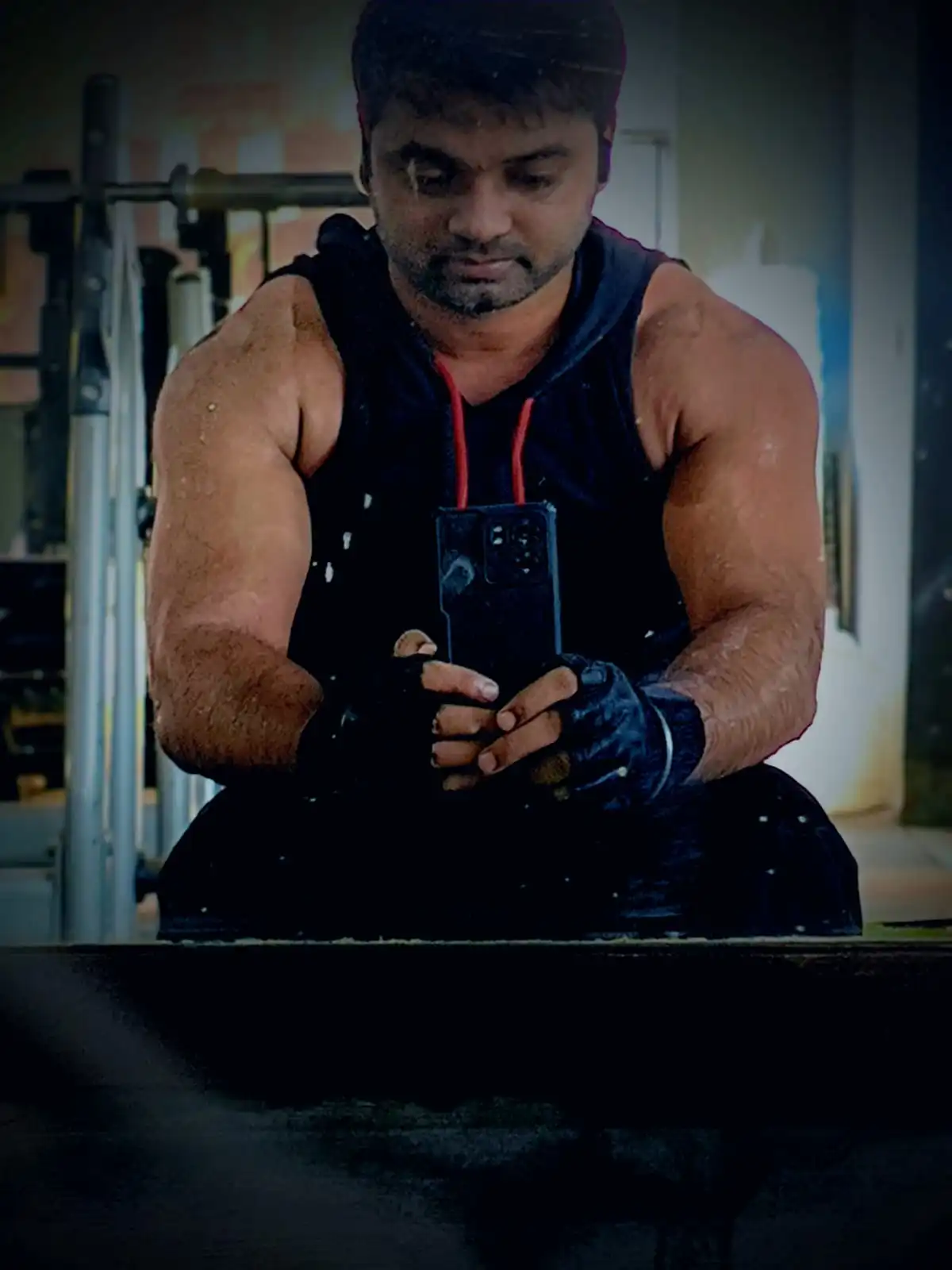
Alok Kumar Sharma
Alok Kumar Sharma treats challenge pages as short training blocks, not transformation promises: clear daily anchors, sensible progression, and recovery that keeps own the starting hold usable.
- Focus: Indian budget fitness, beginner gym systems, body recomposition, and sustainable muscle gain
- Training style: strength-first technique, simple tracking, and realistic progress over flashy challenge culture
- Typical lens: crowded commercial gyms, home-workout friction, hostel meals, office fatigue, and family-kitchen meal planning
- Every core guide is reviewed by Rahul Verma, Certified Fitness Trainer (ISSA) for exercise safety, setup, tempo, substitutions, and progression clarity