
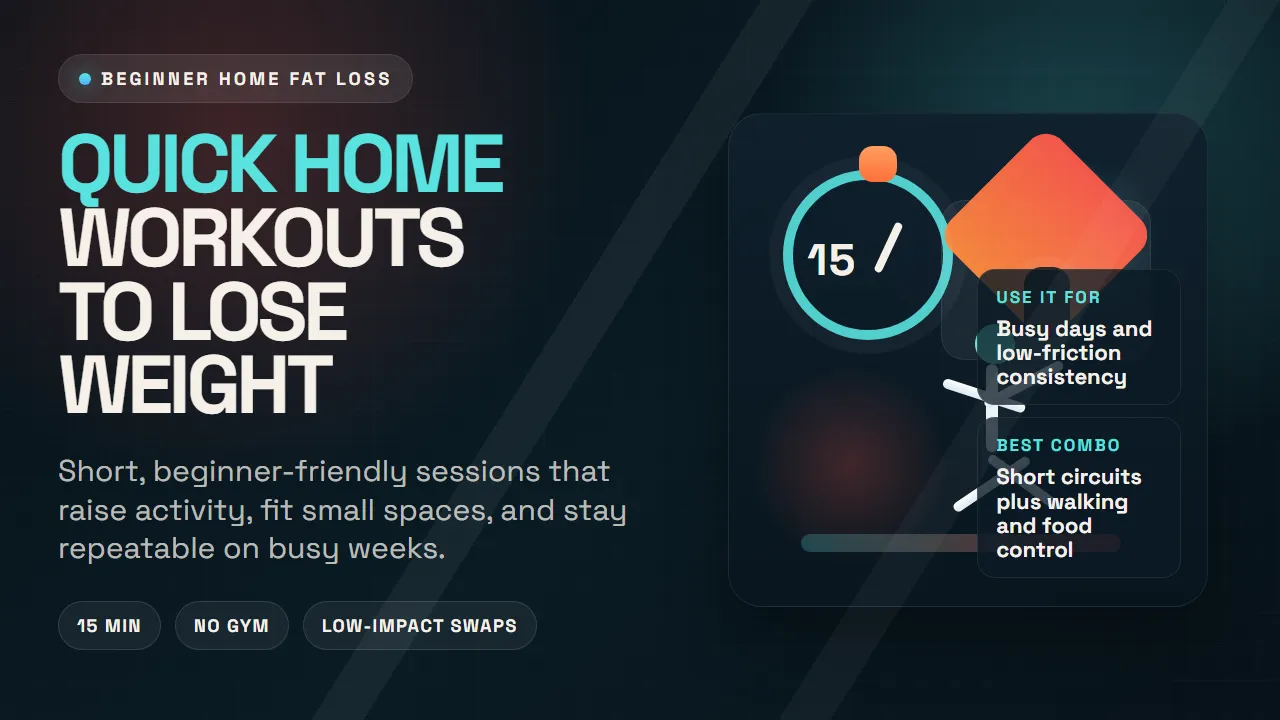
Why quick home workouts work better than people think
Quick home workouts are useful because they remove excuses, not because 12 or 20 minutes is some magic fat-loss number.
A lot of beginners make the mistake of waiting for the perfect hour, the perfect gym mood, or the perfect equipment setup. Meanwhile the week keeps moving, activity stays low, and the plan falls apart before the first real result shows up. Short home workouts solve that by making the start easier.
The problem is that many "fast fat-loss workouts" online are really just punishment circuits. They leave beginners exhausted, sore, and less willing to come back tomorrow. That is not smart fat-loss programming. It is borrowed chaos.
This guide gives you quick home workouts that still make sense: short circuits, low-impact swaps, a weekly structure, and clear progression so the routine can keep working after the first week. Pair it with the new diet plans for weight loss using Indian foods article if you want the food side matched to the same goal.
What quick home workouts do extremely well
Reduce friction
A 15-minute home workout is much easier to start on a bad day than a one-hour gym session you have already mentally delayed three times.
Raise daily activity
Quick circuits work best as part of a more active day. That means they support calorie burn without needing marathon sessions.
Protect muscle better than random cardio-only routines
Squats, push-ups, step-based work, and core tension do more for body composition than endless mindless movement done with no structure.
Fit real schedules
Morning before work, post-lunch reset, or evening consistency block. The best workout plan is the one your week can actually hold.
How to make these home workouts useful from day one
Use the workouts as repeatable building blocks, not as daily punishment.
Start with the shortest circuit first
If 12 minutes feels too easy, good. The goal is to create repeatability first. You can always add rounds once adherence is real.
Pair quick workouts with walking
Quick workouts work best when the rest of the day is not sedentary. Keep steps up and use the circuits as a quality activity anchor, not as permission to do nothing else.
Progress one variable at a time
Add one round, one exercise upgrade, or a small jump in work time. Do not turn every week into a brand-new routine once the first version starts working.
Three quick home workout formats that cover most beginners
Pick one format based on your current energy, space, and joint comfort. The point is not to force the hardest version. The point is to keep the week moving.
12-minute starter
Best when consistency is the main goal. Rotate squats, push-ups, jumping jacks, and a simple core move with short rest.
18-minute full-body fat-loss circuit
Best when you already tolerate basic training and want a little more work density without needing equipment.
Low-impact apartment workout
Best when knees are sensitive, noise matters, or you are training in a shared living space where jumping is not realistic.
| Format | Work block | Main moves | Best use |
|---|---|---|---|
| 12-minute starter | 30 sec work, 20 sec rest, 2-3 rounds | Jumping jack, bodyweight squat, incline push-up, crunch | Busy weekdays or a restart after inconsistency |
| 18-minute circuit | 40 sec work, 20 sec rest, 3 rounds | Squat, push-up, jump step-up, burpee, core finisher | When you want a harder but still short session |
| Low-impact version | 45 sec work, 15 sec rest, 2-3 rounds | Fast march, squat, incline push-up, step-based cardio, side core work | Joint-sensitive days or apartment-friendly training |
If you want a longer session on some weeks, the companion guide on home workout plans for beginners with no equipment gives you a fuller structure. This page is for the days when time is the main obstacle.
Who gets the most from this style of training
Use these quick home workouts when consistency matters more than complexity.
- You want exercise for weight loss but do not have reliable gym time every week.
- You need a no-equipment workout for weight loss that still feels like real training.
- You are trying to lose fat and need a routine that lowers excuses instead of increasing them.
A weekly quick-workout structure I would actually trust
Fat loss works better when the week has rhythm. That means some harder home sessions, some walking, and at least one lower-stress day so the plan stays repeatable.
| Day | Focus | Main session | Support work |
|---|---|---|---|
| Day 1 | Starter circuit | 12-minute full-body workout | Finish with 10-20 minutes of walking if time allows |
| Day 2 | Activity day | Walking, steps, and normal movement | No need to force a second hard session |
| Day 3 | Main effort | 18-minute circuit with harder work intervals | Keep meals more structured than the average busy day |
| Day 4 | Low-impact recovery | Apartment-friendly workout or easy walk | Use this day if joints feel beat up |
| Day 5 | Repeatability check | Repeat Day 1 or Day 3 based on recovery | Progress one variable only if the current version feels clean |
The best quick home exercises when time is short
These are the movements doing most of the work: simple, scalable, and easy to repeat without a gym.
Jumping Jack
Jumping jacks are one of the easiest ways to raise heart rate quickly at home without wasting setup time. They make sense in a quick fat-loss workout because the movement is easy to learn and easy to repeat.
Target muscles: Shoulders, calves, coordination, and cardio capacity
Step-by-step instructions
- Start tall with soft knees and the arms at your sides.
- Jump the feet out while the arms move overhead.
- Land softly and return to the start position with rhythm.
- Keep the pace smooth enough to avoid sloppy footwork.
Common mistakes
- Landing too hard and letting the impact do the work instead of the rhythm.
- Going so fast that breathing and posture collapse immediately.
Pro tips
- If impact bothers you, use fast step jacks instead of full jumps.
Home alternative: Step jack
Gym alternative: Low-resistance bike sprint
Bodyweight Squat
Squats give the circuit a stronger full-body training effect than endless cardio-only moves. They also help quick workouts feel like training instead of random sweating.
Target muscles: Quads, glutes, adductors, and trunk
Step-by-step instructions
- Set the feet at a stance that lets you keep the whole foot grounded.
- Lower under control instead of dropping into the bottom.
- Use the depth you can own with balance and upright posture.
- Stand up by driving through the full foot.
Common mistakes
- Rushing reps so fast that the knees and feet stop working together.
- Turning the movement into a shallow bounce because the circuit feels hard.
Pro tips
- Use a chair as a depth target if form falls apart when fatigue rises.
Home alternative: Chair squat
Gym alternative: Goblet squat
Push-Up
Push-ups add upper-body work and make the workout more complete. That matters because fat loss goes better when the plan still asks your body to keep useful muscle.
Target muscles: Chest, shoulders, triceps, and trunk
Step-by-step instructions
- Brace the trunk before the first rep so the body moves as one piece.
- Lower with control instead of dropping the chest toward the floor.
- Press up through the palm and finish the rep cleanly.
- Use an incline if quality disappears too early.
Common mistakes
- Letting the hips sag once fatigue hits.
- Going too wide with the elbows and making the set feel rough on the shoulders.
Pro tips
- Incline push-ups keep the workout productive on tired days without killing consistency.
Home alternative: Incline push-up
Gym alternative: Machine chest press
Burpee
Burpees are useful when treated like a conditioning tool, not a punishment contest. A few clean reps can raise workout density quickly when time is short.
Target muscles: Full-body conditioning, trunk stiffness, and work capacity
Step-by-step instructions
- Drop the hands to the floor with control and step or jump the feet back.
- Keep the trunk tight in the plank phase.
- Return the feet under the hips and stand up cleanly.
- Only add a jump if it stays smooth and joint-friendly.
Common mistakes
- Turning every burpee into a sloppy race.
- Letting fatigue destroy plank position and lower-back control.
Pro tips
- No-push-up burpees are perfectly valid for beginners who need speed without total chaos.
Home alternative: Step-back burpee
Gym alternative: Bench burpee
Jump Step-Up
Step-based cardio patterns are helpful when you want a faster heart rate but do not want the same impact pattern as constant jumping jacks.
Target muscles: Legs, glutes, coordination, and cardio capacity
Step-by-step instructions
- Use a stable step or platform height you can control safely.
- Drive through the lead foot instead of pushing only from the trailing leg.
- Keep the landing soft if you use the jump version.
- Slow the pace if the step gets sloppy.
Common mistakes
- Using an unstable surface just to make the workout look harder.
- Losing posture and rushing the feet once breathing rises.
Pro tips
- Regular step-ups work fine if you are not ready for the jump version yet.
Home alternative: Fast alternating step-up
Gym alternative: Box step-up
Air Twisting Crunch
Core work belongs in quick workouts because it improves trunk control and rounds out the circuit. It does not "spot reduce" fat, but it does make the workout more complete.
Target muscles: Abs and obliques
Step-by-step instructions
- Brace before the rep instead of yanking through the neck.
- Bring the ribcage toward the pelvis with control.
- Add the twist from the trunk, not by swinging wildly.
- Use a slower pace than you think if quality drops.
Common mistakes
- Pulling on the head to fake range of motion.
- Using speed to hide that the core is no longer controlling the rep.
Pro tips
- Stop each set while the abs still feel like they are doing the work, not the neck.
Home alternative: Standard crunch
Gym alternative: Cable crunch
How to keep quick workouts effective instead of chaotic
Quick workouts are valuable only when they stay clean enough to repeat. These adjustments help that happen.
If impact is your weak point
Replace jumps with step jacks, fast marches, step-ups, and incline push-ups. Lower-impact training still supports fat loss when you keep the pace honest and the week consistent.
If motivation comes and goes
Use the same two or three circuits for a month. Quick workouts get stronger from repetition, not endless novelty. Random variety often feels exciting but hides the fact that nothing is progressing.
| Problem | Smarter fix | Why it works |
|---|---|---|
| You only have 10 minutes | Run the starter circuit and walk later | Short useful work still beats waiting for the perfect longer session |
| Knees feel rough after jumping | Use low-impact steps and slower squats | Joint-friendly volume is more sustainable than forced impact |
| You feel bored quickly | Rotate only one move, not the whole circuit | You keep freshness without losing progression |
| Fat loss has stalled | Check food structure and daily movement first | Workout intensity alone rarely fixes a diet problem |
If the home side of your week is getting stronger but you need a more specific fat-loss angle, the related guide on belly fat loss exercises at home gives you another useful route without selling fake spot reduction.
How to progress quick home workouts over four weeks
Progress should make the sessions look cleaner before it makes them look dramatic.
Week 1: Learn the pace
Keep the circuits shorter than your ego wants. The main goal is to finish the week feeling capable of repeating it.
Week 2: Add one small bump
Add one extra round or slightly longer work intervals. That is enough progress for most beginners.
Week 3: Improve the hardest movement
Use a deeper squat, cleaner push-up setup, or steadier step-up rhythm instead of only chasing more sweat.
Week 4: Compare repeatability
If breathing, recovery, and movement quality all improved, keep the same system and recycle it with one new challenge.
Quick answers before you leave this guide
These are the most common questions that show up after the first week of home training.
Do quick home workouts really help with weight loss?
Yes, if they are repeated consistently and paired with food control. Quick workouts are useful because they lower friction, not because 15 minutes is magical by itself.
How many quick home workouts should I do each week?
Most beginners do well with three to five short sessions a week, depending on recovery, steps, and how intense the circuits are. You do not need to go hard every day.
Do I need equipment for a good home workout to lose weight?
No. Bodyweight circuits, walking, and a few well-chosen movements are enough to start. Equipment can add variety later, but it is not the first barrier.
What if jumping hurts my knees or neighbors hate the noise?
Use low-impact swaps such as squats, fast marches, step-based patterns, incline push-ups, and brisk walking. A quieter routine you can repeat beats a louder routine you avoid.
Trusted sources for this page
These references support the coaching choices in Quick Home Workouts to Lose Weight for Beginners Without Turning Every Session Into Punishment. They are here to ground the page in published guidance and better evidence, not to replace individualized coaching or medical care.
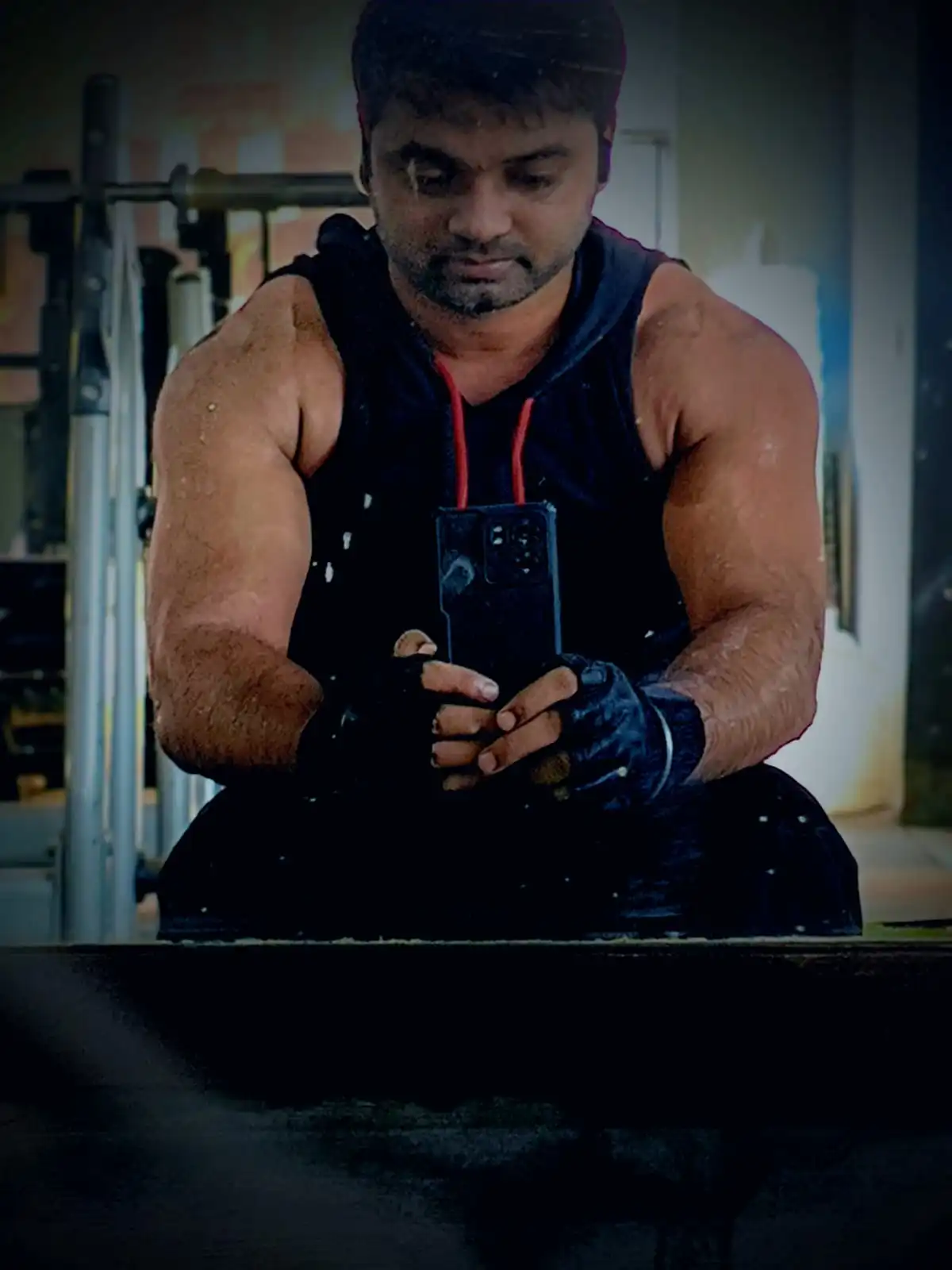
Alok Kumar Sharma
Alok Kumar Sharma writes GymPedia's workout guides for Indian beginners who need training that still works on busy days, crowded weeks, and low-motivation evenings.
- Focus: Indian budget fitness, beginner gym systems, body recomposition, and sustainable muscle gain
- Training style: strength-first technique, simple tracking, and realistic progress over flashy challenge culture
- Typical lens: crowded commercial gyms, home-workout friction, hostel meals, office fatigue, and family-kitchen meal planning
- Every core guide is reviewed by Rahul Verma, Certified Fitness Trainer (ISSA) for exercise safety, setup, tempo, substitutions, and progression clarity