
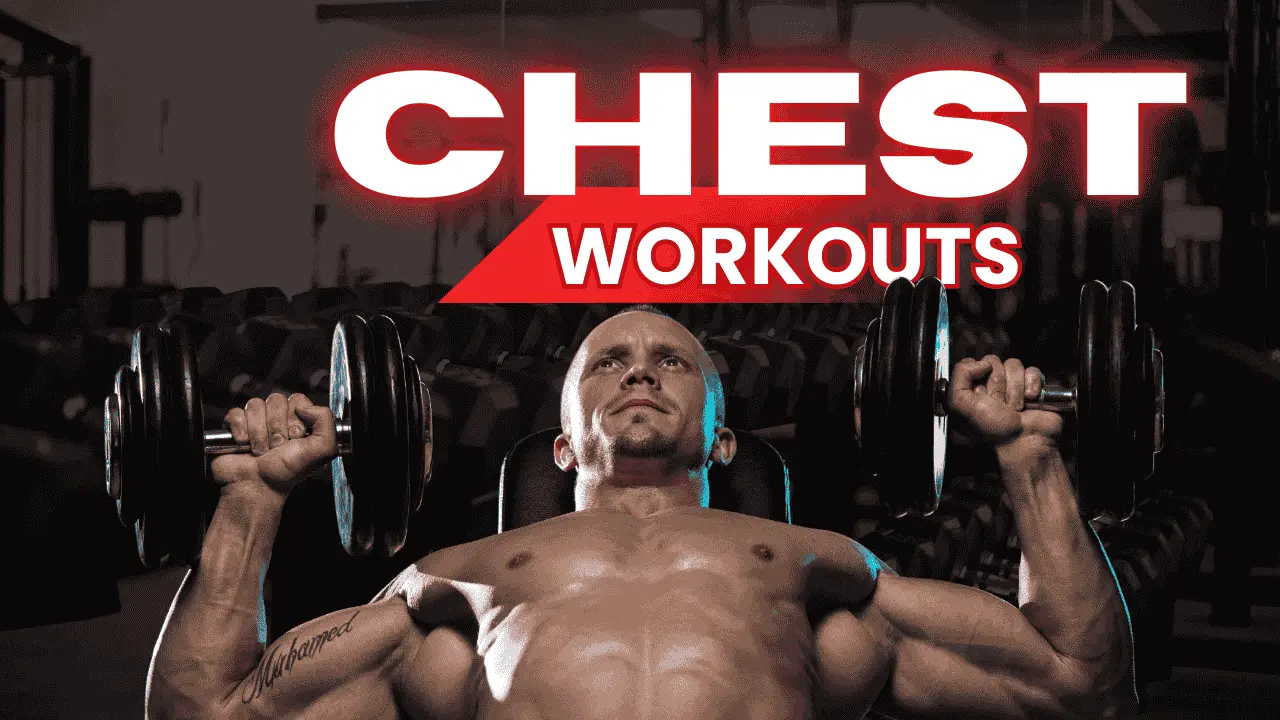
Why this Chest workout feels more realistic in a busy week
This chest guide is built around repeatable pressing mechanics so you can grow the chest without turning every session into shoulder-dominant chaos.
Most beginners turn chest day into a front-delt and ego-lifting session This guide fixes that by giving you a structured chest plan that starts with stable technique and only then asks for more load or more volume.
Use it when you want build chest strength and shape with repeatable pressing mechanics without wasting half the session on random exercises that do not repeat well from week to week. Each featured movement below includes step-by-step execution, common mistakes, pro tips, and local form videos so the plan feels usable immediately.
If this sounds like your current situation
Use the points below to judge whether this Chest workout fits your current level, setup, and goal.
- You want a chest plan that balances heavy pressing, hypertrophy, and shoulder comfort.
- You are stuck copying advanced chest workouts that leave you sore but not stronger.
- You need a session that works in a commercial gym and still has home-friendly swaps.
How to work through this page step by step
If you want the page to feel usable immediately, follow this order first.
Run the first session as written
Start with primary chest day and let Bench Press set the tone. The page becomes easier to judge when day one is clean instead of overbuilt.
Use the anchor lifts, then flex the rest
Keep the first one or two movements consistent and use the listed home or gym swaps only when the setup demands it. The anchors matter more than perfect exercise loyalty.
Track one performance signal
Log sets, reps, and one technique note on Bench Press. If that one movement looks better next week, the page is already giving you useful feedback.
Session map and weekly rhythm
Keep this setup steady for at least a month before rewriting it. Most beginners need more repetition, not more variation.
The schedule below assumes you are training three to five days per week. If you only train three days, keep the first chest day and rotate accessories from the second exposure into the next week.
| Day | Focus | Main session | Support work |
|---|---|---|---|
| Day 1 | Primary chest day | Bench press, incline press, push-up | Finish with fly and machine press |
| Day 2 | Rest or lower body | Leg training or easy cardio | Keep triceps fresh |
| Day 3 | Secondary chest touch | Machine press, cable fly, chest dip | Lower volume and cleaner tempo |
| Day 4 | Recovery | Walk and light mobility | No random max bench attempts |
Execution cues for the movements that drive results
Bench press, incline dumbbell press, and push-ups will drive most of the progress on this page. The breakdown below shows how to keep the chest working instead of dumping the effort into your shoulders.
Bench Press
Bench press builds the main strength pattern that makes the rest of chest training easier to progress. In the context of Chest Workouts for Beginners: build pressing strength without beating up your shoulders, this movement earns its place because it teaches repeatable effort instead of random fatigue.
Target muscles: Chest, front delts, triceps
Step-by-step instructions
- Set your feet first, squeeze the bench or floor with your upper back, and brace before the first rep.
- Lower the weight with control until your elbows stay stacked under your wrists instead of flaring wildly.
- Drive the handle or dumbbell up by pushing through the palm and keeping your ribcage quiet.
- Pause long enough at the top to reset your shoulder position before the next rep.
Common mistakes
- Letting the shoulders roll forward and turning the top half of the set into a shrug.
- Bouncing the weight or arching hard just to turn a moderate load into an ego rep.
Pro tips
- Film your first working set from the side once a week so you can see bar path and elbow position clearly.
A practical starting point for Bench Press on this chest workout is 4 sets of 6-8. End the set when speed or position starts to slip.
Home alternative: Push-up with backpack
Gym alternative: Machine chest press
Incline Dumbbell Press
Incline pressing helps beginners balance chest development while learning each arm to move symmetrically. In the context of Chest Workouts for Beginners: build pressing strength without beating up your shoulders, this movement earns its place because it teaches repeatable effort instead of random fatigue.
Target muscles: Upper chest and front delts
Step-by-step instructions
- Set your feet first, squeeze the bench or floor with your upper back, and brace before the first rep.
- Lower the weight with control until your elbows stay stacked under your wrists instead of flaring wildly.
- Drive the handle or dumbbell up by pushing through the palm and keeping your ribcage quiet.
- Pause long enough at the top to reset your shoulder position before the next rep.
Common mistakes
- Letting the shoulders roll forward and turning the top half of the set into a shrug.
- Bouncing the weight or arching hard just to turn a moderate load into an ego rep.
Pro tips
- Film your first working set from the side once a week so you can see bar path and elbow position clearly.
For Incline Dumbbell Press, work in the 3 x 8-10 range here and leave a little technical margin so the last rep still looks like the first in this chest workout.
Home alternative: Feet-elevated push-up
Gym alternative: Incline machine press
Push-Up
Push-ups are the simplest way to teach pressing tension and scapular control without a barbell. In the context of Chest Workouts for Beginners: build pressing strength without beating up your shoulders, this movement earns its place because it teaches repeatable effort instead of random fatigue.
Target muscles: Chest, serratus, triceps, core
Step-by-step instructions
- Set your hands just outside shoulder width and lock the body into one straight line before the first rep.
- Lower under control until the chest gets close to the floor or bench without the hips sagging.
- Push the floor away while keeping the ribs tucked and the shoulders away from the ears.
- Reset the plank between reps so the final reps look like the first ones.
Common mistakes
- Letting the hips sag and turning the rep into a lower-back exercise.
- Shortening the range because the first rep was too hard from the chosen variation.
Pro tips
- Raise the hands on a bench or sturdy surface before you do ugly floor reps; cleaner volume builds faster progress.
Use roughly 3 sets of 8-15 for Push-Up in this chest workout. The goal is repeatable quality, not squeezing out sloppy extras.
Home alternative: Incline push-up
Gym alternative: Weighted push-up
Cable Fly
Fly work finishes the session by keeping chest tension high without needing heavy loading. In the context of Chest Workouts for Beginners: build pressing strength without beating up your shoulders, this movement earns its place because it teaches repeatable effort instead of random fatigue.
Target muscles: Chest shortening and stretch control
Step-by-step instructions
- Use a light enough load to control the start and finish of every rep.
- Lead with the elbow and keep the shoulder blade stable rather than shrugging upward.
- Pause briefly near the peak contraction to remove momentum.
- Lower with patience so the target muscle handles the work on the way down too.
Common mistakes
- Adding speed before you own the pattern.
- Letting the easiest body part compensate for the weakest one.
Pro tips
- Keep one rep in reserve on the first week so your technique stays sharp enough to build on next session.
For Cable Fly, work in the 3 x 12-15 range here and leave a little technical margin so the last rep still looks like the first in this chest workout.
Home alternative: Resistance-band fly
Gym alternative: Pec deck fly
Chest Dip
Dips give you a strong bodyweight strength marker once pressing technique is reliable. In the context of Chest Workouts for Beginners: build pressing strength without beating up your shoulders, this movement earns its place because it teaches repeatable effort instead of random fatigue.
Target muscles: Lower chest, triceps, shoulders
Step-by-step instructions
- Set your upper arm angle before the set and keep it consistent while the forearm moves.
- Brace your trunk so you are not turning triceps work into a lower-back movement.
- Lock out through the elbow only as far as you can without shoulder shrugging.
- Take the handle back slowly so the triceps stay loaded between reps.
Common mistakes
- Adding speed before you own the pattern.
- Letting the easiest body part compensate for the weakest one.
Pro tips
- Keep one rep in reserve on the first week so your technique stays sharp enough to build on next session.
For Chest Dip, work in the 2 x 6-10 range here and leave a little technical margin so the last rep still looks like the first in this chest workout.
Home alternative: Bench dip
Gym alternative: Assisted dip machine
Machine Chest Press
Machines help you add volume late in the session without lower-back or setup fatigue limiting the work. In the context of Chest Workouts for Beginners: build pressing strength without beating up your shoulders, this movement earns its place because it teaches repeatable effort instead of random fatigue.
Target muscles: Chest with more stability support
Step-by-step instructions
- Set your feet first, squeeze the bench or floor with your upper back, and brace before the first rep.
- Lower the weight with control until your elbows stay stacked under your wrists instead of flaring wildly.
- Drive the handle or dumbbell up by pushing through the palm and keeping your ribcage quiet.
- Pause long enough at the top to reset your shoulder position before the next rep.
Common mistakes
- Letting the shoulders roll forward and turning the top half of the set into a shrug.
- Bouncing the weight or arching hard just to turn a moderate load into an ego rep.
Pro tips
- Film your first working set from the side once a week so you can see bar path and elbow position clearly.
A practical starting point for Machine Chest Press on this chest workout is 2 sets of 10-12. End the set when speed or position starts to slip.
Home alternative: Resistance-band press
Gym alternative: Hammer Strength press
Four-week checkpoint
Use the four-week build below to make Bench Press and Incline Dumbbell Press feel more repeatable before you worry about dramatic jumps.
Week 1: Build the groove
Start with cleaner reps, calmer pacing, and enough restraint that the second exposure still feels useful. The point is to build rhythm around primary chest day, not to win the week.
Week 2: Add useful work
Add a small rep increase or one extra set on the first one or two movements if form stays sharp, especially around Bench Press. If recovery is bad, keep volume steady and improve execution instead of forcing build chest strength and shape with repeatable pressing mechanics.
Week 3: Push the main lifts a little
This is the week to make Bench Press feel more serious without turning the session chaotic. Small load jumps or cleaner tempo usually beat a dramatic rewrite when the goal is build chest strength and shape with repeatable pressing mechanics.
Week 4: Compare, then recycle
Use the fourth week as a checkpoint, not a finish line. If the anchor lifts in primary chest day are cleaner and recovery is manageable, recycle the structure and keep building from there.
Most beginners feel better bar path and pressing confidence within 2-3 weeks. Chest size changes usually show up after 8-12 weeks of honest progressive overload and enough food.
How to make this fit a family kitchen, hostel, or office schedule
Training only sticks when the meals, timing, and recovery habits are realistic enough to repeat next week too, especially when build chest strength and shape with repeatable pressing mechanics is the target.
For muscle-focused pages, the winning meal pattern is usually simple: protein in every meal, enough carbs around training, and snacks you can afford often enough to stay consistent.
Pre-workout
Your pre-workout meal does not need to be fancy. Something easy to digest with a little protein and carbs is enough if it helps primary chest day start on time.
Budget reality
Prepare the floor space, first exercise, and timer before motivation becomes the bottleneck. Home plans improve when startup friction gets cut aggressively around Bench Press.
What readers usually skip
- Set the bench and shoulder blades before unracking. That one habit solves a lot of pressing issues.
- Do not force chest dips if shoulders hate them. Stable push-ups and machine presses can do the job.
- A stronger chest usually comes from better weekly frequency and total quality reps, not more exercise names.
- Track either load, reps, or pause quality on the bench press so progress stays objective.
Chest training principles that matter more than extra exercises
Most people do not need more chest exercises. They need better exercise order, cleaner range of motion, and a weekly structure they can repeat while fresh enough to notice progress.
This guide keeps the session tight on purpose: a lead movement for strength, a middle stretch for repeatable volume, and just enough accessory work to round out the pattern.
Common sticking points and how to adjust
Use these adjustments to keep Bench Press and the rest of the page effective whether you are coming in fresh or returning with a base around build chest strength and shape with repeatable pressing mechanics.
If you are newer than you think
Treat the plan like skill practice first. If Bench Press and the next key movement are improving, you do not need extra volume just to feel more serious about build chest strength and shape with repeatable pressing mechanics.
If you already have a base
If recovery is good, add one focused accessory or push the final main set a little harder. The better upgrade is cleaner output on the same plan, not a brand-new chest day every week.
| Main movement | Home-friendly option | Gym-friendly option |
|---|---|---|
| Bench Press | Push-up with backpack | Machine chest press |
| Incline Dumbbell Press | Feet-elevated push-up | Incline machine press |
| Push-Up | Incline push-up | Weighted push-up |
| Cable Fly | Resistance-band fly | Pec deck fly |
| Chest Dip | Bench dip | Assisted dip machine |
| Machine Chest Press | Resistance-band press | Hammer Strength press |
Frequently asked questions
These are the questions most likely to come up once you try to use the page in real life.
Do I need every exercise listed on this page?
No. The first one or two anchor movements matter most. Use the substitutions when your setup demands it and keep the training intent intact instead of forcing one exact version.
How many times a week should I use this guide?
Use it at the frequency suggested in the weekly layout and let Bench Press tell you whether recovery is keeping up. If the first movement keeps getting sloppier, simplify before you add more volume.
When should I progress the plan?
Progress when the current version looks cleaner and more repeatable, not just when you feel impatient. Small rep bumps, cleaner tempo, or one extra set usually beat a dramatic rewrite.
References and review standards
These references support the coaching choices in Chest Workouts for Beginners: build pressing strength without beating up your shoulders. They are here to ground the page in published guidance and better evidence, not to replace individualized coaching or medical care.
Alok Kumar Sharma
Alok Kumar Sharma writes GymPedia's training guides for Indian beginners who need clear structure, honest expectations, and plans that still work on busy weeks around build chest strength and shape with repeatable pressing mechanics.
- Focus: Indian budget fitness, beginner gym systems, body recomposition, and sustainable muscle gain
- Training style: strength-first technique, simple tracking, and realistic progress over flashy challenge culture
- Typical lens: crowded commercial gyms, home-workout friction, hostel meals, office fatigue, and family-kitchen meal planning
- Every core guide is reviewed by Rahul Verma, Certified Fitness Trainer (ISSA) for exercise safety, setup, tempo, substitutions, and progression clarity